Walk into any medieval parish church in England and you're standing inside someone's life's work. The stones were cut, hauled and set by people who never saw the building finished. Eight hundred years later, that work is your problem now — or your responsibility, if you sit on a fabric committee, look after a listed building, or have just been handed a quinquennial inspection report with three red flags in the masonry section.
Here's the trap: most damage to historic church stonework is caused by well-meaning intervention, not by neglect. I've watched a churchwarden's face fall when a conservation officer explained that the crisp, pale, "clean" tower he'd paid for had lost a century of protective patina in a fortnight of over-enthusiastic washing. The stone looked newer, and it was worse off.
So this is a practical overview of conserving church stone, from someone who has stood in the scaffolding, argued with the faculty process, and learned a few things the hard way.
Key takeaways
- Diagnose before you touch anything. Identify the stone, the failure mode and the moisture source before a single chisel is lifted.
- Doing nothing is a legitimate conservation decision — and often the correct one.
- Never repoint with cement. Lime mortars are softer than the stone for a reason: they sacrifice themselves.
- Test every method on an inconspicuous trial panel and wait at least a full season before judging it.
- Church work means faculty jurisdiction, public safety and funding — plan for all three from day one.
- Maintenance beats restoration. A gutter cleared twice a year prevents more decay than most five-figure interventions.
Why conserving historic church stonework is not the same as conserving a monument
The guidance you'll find online for stone conservation is mostly written for gravestones and sculpture. Useful up to a point. Church buildings break every assumption those guides make.
For one thing, the building is in continuous use. You can't close a parish church for two years while the west front dries out. For another, the stonework isn't a single fabric: a typical medieval church has ashlar facing in one quarry's stone, rubble core in whatever was to hand, Victorian restoration patches, and twentieth-century cement renders holding it all together like bad surgery.
The regulatory layer nobody warns you about
In the Church of England, a faculty is the diocesan permission required for most works to a consecrated building or churchyard — and it is not a formality. You'll also likely need to consult your diocesan advisory committee, and if the building is listed, the local planning authority has a say. In Scotland, Ireland and Wales the equivalents differ in name and detail. Fixing an eroded corbel on a village church is a more regulated act than re-roofing your own house.
Sound tedious? It is. It's also the mechanism that stops a well-intentioned PCC from sandblasting a fourteenth-century doorway.
Diagnosing the damage before you reach for a tool
Stone decay is a symptom. The disease is almost always water, salt or movement. Get the diagnosis wrong and every subsequent pound is wasted.
Reading the stone
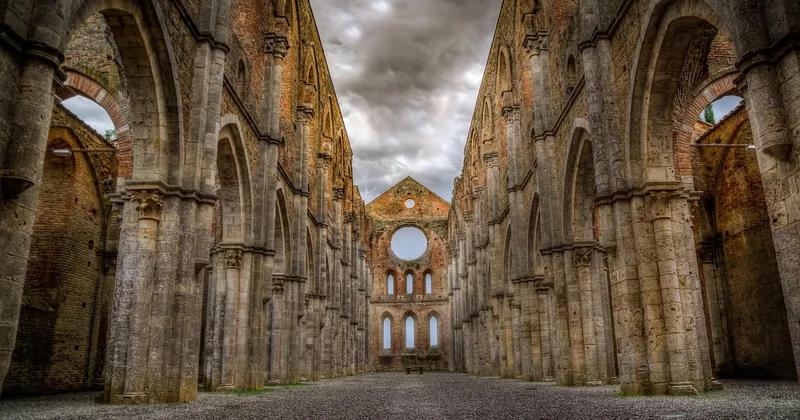
Look at how the surface is failing. Surface blistering and powdering usually point to salt crystallisation, often fed by rising damp or a cement render trapping moisture. Deep flaking in horizontal beds suggests a stone laid against its natural bedding plane. Erosion on sheltered faces while exposed faces are intact is a strong hint of past abrasive cleaning, not natural weathering.
And the worst part? Some of what looks alarming is stable. A friable, sugared surface on a sheltered north wall may have been that way for decades and will still be that way in another fifty years. Once you've scraped it back "to sound stone", it will erode measurably for the rest of your life.
The moisture question
Before anything else, trace the water. Roof leaks, blocked hoppers, overflowing gutters, hard cement pointing that pushes rain into the core instead of letting it evaporate out — these cause more stone loss than frost and pollution combined in most cases I've seen. There's a reason the first recommendation of nearly every building surveyor is drainage and rainwater goods.
- Check gutters and downpipes first. Always.
- Look for cement pointing, cement render, and non-breathable paints — all moisture traps.
- Note vegetation: ivy and valerian roots prise open joints, and their removal is urgent but must be done gently.
- Photograph everything, with a scale. You will need the record.
Cleaning, consolidating and repointing: what actually works
Here is where the practical money is spent, and where most damage happens.
Cleaning
Ask the question conservation officers ask: is the cleaning necessary, and will it benefit the long-term conservation of the fabric? Often the honest answer is no. Dirt and patina are not decay. If cleaning is justified, work from gentlest upwards.
| Method | Use for | Risks |
|---|---|---|
| Dry brushing, soft bristles | Light soiling, loose deposits | Slow, limited |
| Low-pressure water (well under 100 bar), fine mist | General biological growth | Over-wetting can drive water into the core |
| Poultices and compresses | Staining, soluble salts, bird fouling | Needs skilled application and control of drying |
| Biocide | Algae and lichen on hard stone | Kills protected lichens; runoff into churchyard |
| Abrasive blasting | Almost nothing on historic church stone | Irreversible loss of surface; widely condemned |
Test on a trial panel in an inconspicuous spot, leave it through a winter, then judge. I've seen a trial patch look perfect in July and show fresh spalling by March. That's the experiment doing its job.
Repointing
Mortar must be softer, more porous and less rigid than the stone it surrounds. It exists to flex and to fail first. Cement-rich mortar is harder than many historic stones — when moisture moves, the stone sacrifices itself instead of the joint. Use a lime-based mortar matched to the original in strength, composition and colour, and rake out joints properly rather than smearing mortar over the face.
Consolidation and replacement
Chemical consolidants are a genuine last resort for friable stone, and the results are unpredictable across different lithologies. If you go there, it must be specified by someone who has used it on that stone type before.
Replacement is honest and sometimes right: a deeply eroded pinnacle or a carved head reduced to a nub may be better replaced with matching stone, keeping the old piece as a record. But respect the difference between structural necessity and the urge to make the building look tidy.
Planning, permissions and paying for it
Sequence matters. Diagnose, then test, then apply for faculty, then intervene, then monitor. Skipping to the intervention costs more and usually gets refused.
- Commission a proper condition survey or quinquennial inspection first.
- Engage a conservation-accredited architect or surveyor — accreditation exists precisely for this.
- Budget for the paperwork and the professional fees; they are not a rounding error.
- Look at grant funding available for listed places of worship, and at local trusts, before you launch an appeal.
- Write a maintenance plan while you're in the headspace. It will outlast the scaffold.
The most common regret I encounter is not financial. It's the church that spent its whole fabric fund on a dramatic intervention and had nothing left for the gutter that caused the problem.
The long view: maintenance beats restoration
Real talk: the craftsperson who will do the most for your stonework is the volunteer with a ladder and a drain rod. Clearing rainwater goods twice a year, checking after storms, re-fixing slipped slates, keeping vegetation off the walls — that routine does more than most large contracts, and it costs almost nothing.
Set a simple cycle: inspect once a year, act immediately on water, and photograph everything. Keep the records in one place, because the next incumbent will need them.
Doing less, more often, in the right order: that's the whole discipline. The stones have already outlasted everyone who argued about them. Your job is to make sure the next century's custodians inherit them intact — and, ideally, with better paperwork.